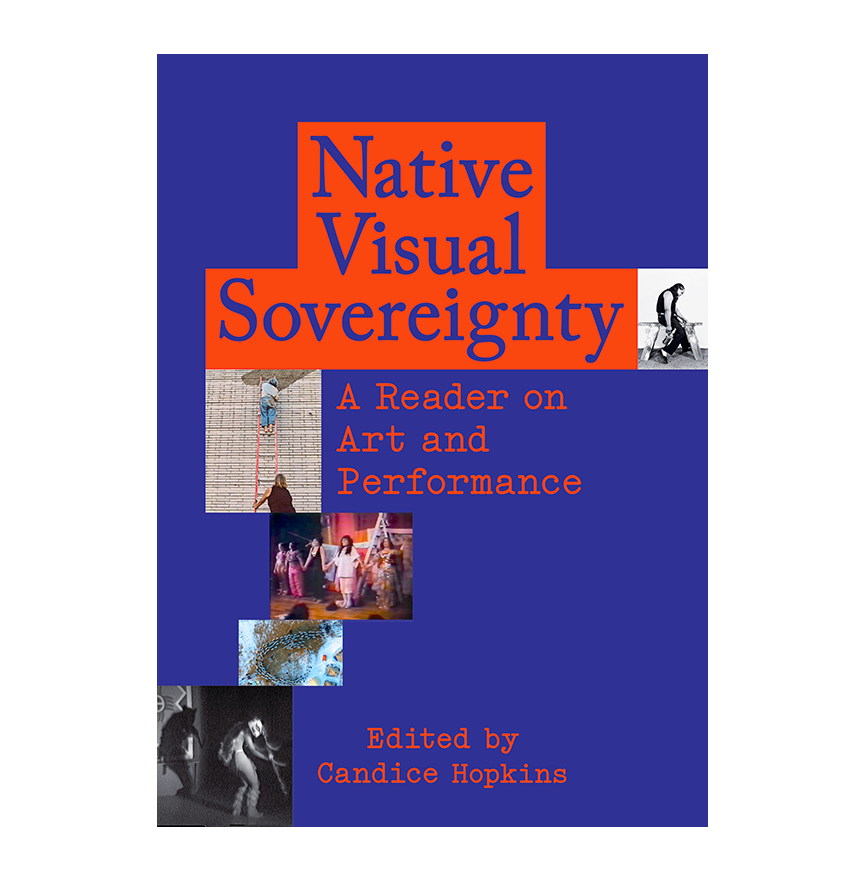
Native Visual Sovereignty: A Reader on Art and Performance centers performance and theater as an origin point for the development of contemporary art by Native American, First Nations, Métis, Inuit, and Alaska Native artists, beginning with the role that Native artists have played in the self-determination era, sparked by the occupation of Alcatraz by the Indians of All Tribes in 1969. Native artists then and now are at the vanguard of performance art practices and discourse, using humor as a strategy for cultural critique and reflection, parsing the inherent relationships between objecthood and agency, and often complicating representations of the Native body through signaling the body’s absence and presence via clothing, blanketing, and adornment. Song, dance, and music are also posited as a basis for collectivity and resistance and a means to speak to a time when Native traditional ceremony and public gatherings were illegal in both the United States and Canada. Featuring excerpts from the 1969 document Indian Theatre: An Artistic Experiment in Progress, published by the Institute for American Indian Arts (IAIA) in Santa Fe, New Mexico, this generously illustrated reader will also include four long-form essays by leading Indigenous scholars, commissioned artist notes, oral-history interviews, and an edited selection of key texts from the fields of Native contemporary art, art history, and theory. The reader is an essential resource for curators, Native and non-Native artists, scholars, students, and teachers.
With contributions by:
Aiyyana Maracle, Arielle Twist, asinnajaq, Billy-Ray Belcourt, Brandee Caoba, Candice Hopkins, Cannupa Hanska Luger, Claire Kim, Cheryl L’Hirondelle, Demian DinéYazhi', Dylan Robinson, Eric-Paul Riege (with Hólǫ́), Eve Tuck, G. Peter Jemison, James Luna, Jeffrey Gibson, John G. Hampton, Jolene Rickard, Joseph Naytowhow, K. Wayne Yang, Kite, Leanne Betasamosake Simpson, Leo Cocar, Lloyd Kiva New, Marcia Crosby, María Carri, Maria Hupfield, Marina Caron, Michelle H. Raheja, Miss Chief Eagle Testickle (Kent Monkman and Gisèle Gordon), Monica Charles, New Red Order, Paul Chaat Smith, Rachel Horvath Eboh, Rebecca Belmore, Richard William Hill, Rolland R. Meinholtz, Spiderwoman Theater, Steven Durland, Szu-Han Ho, Tanya Lukin Linklater, Theo Jean Cuthand, Tom Eccles, Walter Scott